

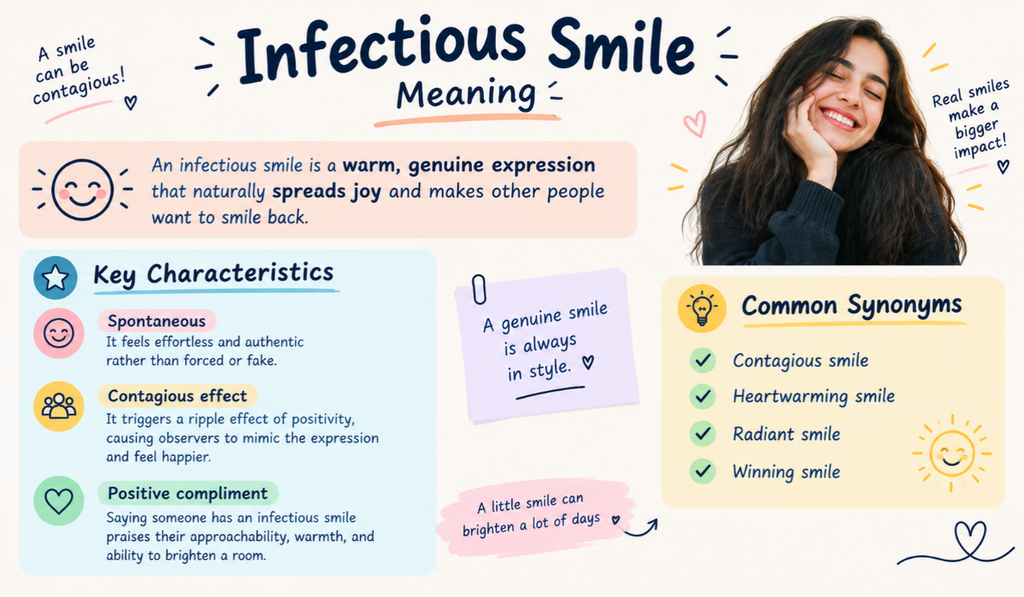
The infectious smile meaning refers to a warm, genuine expression that naturally spreads happiness and makes other people want to smile too. An infectious smile usually feels spontaneous and authentic rather than forced or fake. When someone has an infectious smile, their positive expression can create a ripple effect, making people around them feel more comfortable, cheerful, and connected. Calling someone’s smile infectious is generally a positive compliment that highlights their warmth, approachability, and ability to brighten the mood.
The phrase does not mean that a smile is literally infectious like an illness. Instead, it uses the idea of something spreading from one person to another to describe the emotional effect of a genuine smile. An infectious smile can make a conversation feel friendlier, lighten an awkward moment, or simply bring a little happiness to people nearby.
What Does Infectious Smile Mean?
An infectious smile is a smile that is so genuine, cheerful, or appealing that other people naturally feel like smiling when they see it. It often reflects positive emotions such as happiness, friendliness, excitement, kindness, or confidence. The expression can influence the mood of people nearby without the person intentionally trying to make anyone smile.
For example, imagine a friend laughing about something funny and smiling naturally. Even if you were not part of the joke, their genuine happiness might make you smile too. This is the basic idea behind an infectious smile: one person’s positive expression creates a similar positive reaction in others.
| Aspect | Meaning |
| Infectious smile | A smile that naturally makes others smile |
| Main feeling | Happiness, warmth, or positivity |
| Expression | Genuine and spontaneous |
| Effect on others | Creates a positive emotional response |
| Common use | Compliment or description |
Why Is It Called an Infectious Smile?
The word “infectious” normally describes something that can spread from one person to another. In the phrase “infectious smile,” however, it is being used figuratively rather than medically. The idea is that happiness expressed through a smile can spread socially, encouraging other people to respond with their own smiles.
This makes the phrase more expressive than simply saying “nice smile.” When someone describes a smile as infectious, they are usually focusing on its effect on other people rather than only its physical appearance. It suggests that the smile has a positive energy that is difficult to ignore.
Emotional Effect of a Smile
A genuine smile can make social interactions feel more relaxed and welcoming. When someone smiles naturally, others may respond positively because the expression communicates friendliness and openness. This is especially noticeable when people meet someone who smiles easily and warmly.
The phrase “infectious smile” captures this social effect in a simple way. It suggests that the person’s happiness is noticeable and can influence the atmosphere around them. That is why the expression is commonly used as a compliment.
Read Also: WBY Meaning in Text || What Does MYF Mean on Text
Characteristics of an Infectious Smile
One of the main characteristics of an infectious smile is that it feels natural. It does not look like someone is forcing a smile simply because they are expected to smile. Instead, the expression appears effortless and reflects genuine emotion.
A spontaneous smile can feel more relatable because people often respond to authentic emotions. When someone smiles naturally during a conversation, others may feel more comfortable and relaxed. This authenticity is an important part of what makes a smile feel infectious.
Positive and Contagious
An infectious smile often has a noticeable effect on the people around it. Someone who sees the smile may automatically smile back or feel more cheerful. The reaction does not necessarily happen because the person consciously decides to copy the expression.
The word “contagious” is therefore often used as a synonym for infectious in this context. Both words describe an emotional response that appears to spread between people, creating a warmer and more positive social environment.
Some common characteristics include:
- Natural and effortless expression
- Warm and friendly appearance
- Positive emotional energy
- Ability to make others smile
- Often associated with happiness and kindness
- Makes social interactions feel more welcoming
Infectious Smile as a Compliment
Calling someone’s smile infectious is usually a meaningful compliment. It suggests that their smile has a positive effect on other people and that their presence can make an environment feel happier. The compliment is about more than physical attractiveness.
For example, saying “You have an infectious smile” can mean that the person’s smile feels warm, genuine, and uplifting. It can also suggest that their happiness is easy for others to notice and enjoy.
Why It Feels Like a Special Compliment
A compliment about an infectious smile focuses on the emotional impact of a person’s expression. Instead of simply describing how the smile looks, it describes how the smile makes other people feel. This gives the phrase a more personal and heartfelt quality.
The expression can be used between friends, family members, coworkers, or romantic partners. Depending on the relationship and context, it can sound friendly, affectionate, appreciative, or even slightly romantic.
Infectious Smile Meaning in Different Situations
The meaning of an infectious smile can change slightly depending on the situation and the relationship between the people involved. In everyday conversations, it usually describes someone whose smile naturally makes others feel happier or more comfortable. It can be used to describe a friend, family member, coworker, stranger, or even someone in a romantic situation.
In Everyday Conversation
In everyday conversation, “infectious smile” is often used to describe someone who is naturally cheerful and makes people around them feel comfortable. A person might say, “She has such an infectious smile” after meeting someone who smiled warmly throughout a conversation.
The phrase can also be used when talking about someone’s personality. It may suggest that the person is approachable, positive, and pleasant to be around. In this sense, the smile becomes a reflection of the person’s overall social energy.
In Romantic Contexts
In a romantic context, calling someone’s smile infectious can be a sweet way to express attraction or affection. It suggests that their smile has a strong emotional effect on the person giving the compliment.
For example, “Your infectious smile always makes my day better” can sound warm and affectionate. However, the phrase is not automatically romantic. Its meaning depends on the relationship and the situation in which it is used.
In Professional or Social Situations
The phrase can also be appropriate in professional and social settings. Someone might describe a colleague as having an infectious smile because they create a friendly atmosphere at work. It can be a way of appreciating someone’s positive attitude without focusing on appearance alone.
In social situations, the phrase can similarly describe someone who makes gatherings feel more enjoyable. A person’s natural smile can help others feel welcome, especially when meeting new people.
Examples of Infectious Smile
Understanding the infectious smile meaning becomes easier when you see how the phrase works in real sentences. It can describe someone’s natural expression, the effect of their smile, or the positive atmosphere they create.
Here are some examples:
- “Her infectious smile made everyone in the room feel welcome.”
- “He has an infectious smile that makes people smile back.”
- “Your infectious smile can brighten even a difficult day.”
- “Everyone noticed her infectious smile when she entered the room.”
- “His infectious smile made the conversation feel more relaxed.”
- “She greeted everyone with an infectious smile.”
These examples show that the phrase usually focuses on the effect of the smile rather than simply describing its shape or appearance.
Infectious Smile Synonyms
Several words and phrases can communicate a similar idea to “infectious smile.” The best choice depends on the tone and context of your sentence. “Contagious smile” is probably the closest alternative because it conveys almost the same idea of a smile spreading happiness to others.
Other alternatives can emphasize different qualities, such as warmth, beauty, confidence, or charm. A radiant smile, for example, focuses more on brightness and attractiveness, while a heartwarming smile emphasizes the emotional response it creates.
| Synonym | Meaning or Tone |
| Contagious smile | Naturally makes others smile |
| Heartwarming smile | Creates warm, pleasant feelings |
| Radiant smile | Bright, cheerful, and attractive |
| Winning smile | Charming and appealing |
| Warm smile | Friendly and welcoming |
| Cheerful smile | Shows happiness and positivity |
Infectious Smile vs. Contagious Smile
In most everyday contexts, “infectious smile” and “contagious smile” have almost the same meaning. Both describe a smile that influences other people and encourages a positive emotional response. The two expressions can often be substituted for one another without changing the main idea.
There can be a slight difference in tone. “Contagious smile” strongly emphasizes the way the smile spreads from one person to another, while “infectious smile” can sound a little more expressive or descriptive. Both are generally positive ways to describe someone’s smile.
How to Use Infectious Smile in a Sentence
The phrase “infectious smile” can be used after a subject when describing someone’s expression. For example, “She has an infectious smile” is a simple and natural sentence. You can also describe its effect by saying, “His infectious smile made everyone feel happier.”
The phrase works particularly well in personal descriptions, compliments, captions, articles, and conversations. It can be combined with words such as warm, genuine, cheerful, natural, or beautiful, depending on what you want to express.
Some useful sentence patterns are:
- “She has an infectious smile.”
- “His smile is truly infectious.”
- “Her infectious smile brightened the room.”
- “I love your infectious smile.”
- “That infectious smile always makes me happy.”
What Does It Mean When Someone Says “You Have an Infectious Smile”?
If someone tells you that you have an infectious smile, they are usually complimenting the positive effect your smile has on them or other people. They may be saying that your smile feels natural, cheerful, warm, or difficult to resist.
The compliment can also indicate that your expression makes people feel comfortable around you. Depending on the relationship, it could be friendly, affectionate, or romantic, but the phrase itself does not automatically indicate romantic interest.
Possible Responses
If someone gives you this compliment, a simple response can keep the conversation natural. You could say “Thank you, that’s really sweet,” or “I’m glad my smile makes you happy.” If the compliment comes from someone you like, you can respond in a warmer or more playful way.
For example:
- “Thank you, that means a lot.”
- “That’s such a lovely compliment.”
- “I’m glad my smile can make you smile too.”
- “Thank you! You just made me smile even more.”
Why Do People Like Infectious Smiles?
People often respond positively to genuine smiles because they make interactions feel friendlier and less tense. A warm smile can be especially helpful when people are meeting for the first time or entering an unfamiliar social situation.
An infectious smile can therefore make someone appear approachable and welcoming. It may encourage conversation and help create a more comfortable atmosphere without requiring any words.
They Show Positive Emotion
A natural smile can communicate happiness, friendliness, amusement, appreciation, or excitement. When these emotions are expressed openly, other people may respond to them positively.
This is one reason an infectious smile can leave a memorable impression. People may not remember every detail of a conversation, but they can remember how comfortable or happy someone made them feel.
Conclusion
The infectious smile meaning describes a warm and genuine smile that naturally makes other people want to smile or feel happier. The word “infectious” is used figuratively to describe how positive emotions can seem to spread from one person to another.
Calling someone’s smile infectious is generally a positive compliment. It can suggest that the person is friendly, approachable, cheerful, and capable of brightening the atmosphere around them. Similar expressions include contagious smile, heartwarming smile, radiant smile, and winning smile.
FAQs About Infectious Smile Meaning
Q1. What is the infectious smile meaning?
An infectious smile is a genuine and positive smile that naturally makes other people want to smile or feel happier. It describes the emotional effect of someone’s smile rather than simply its physical appearance.
Q2. Is an infectious smile a compliment?
Yes, “infectious smile” is generally used as a positive compliment. It suggests that someone’s smile is warm, natural, cheerful, and capable of making people around them feel good.
Q3. Is infectious smile the same as contagious smile?
In most everyday situations, the two phrases have almost the same meaning. Both describe a smile that naturally influences other people and encourages them to smile or feel more positive.
Q4. Can infectious smile be used romantically?
Yes, it can be used in a romantic context. Saying “You have an infectious smile” can express attraction or affection, although the phrase itself is not necessarily romantic and can also be used between friends or colleagues.
Q5. What are some synonyms for infectious smile?
Common synonyms include contagious smile, heartwarming smile, radiant smile, winning smile, warm smile, and cheerful smile. The best alternative depends on the exact tone you want to convey.
Q6. What does it mean when someone says your smile is infectious?
It usually means that your smile has a positive effect on the person who sees it. They may feel happier, more comfortable, or naturally inclined to smile because of your expression.
Read Also: What Does EYP Mean In Text || IMY Meaning in Text